
Impact of the Last 100 Meters
Navigation works well outdoors — until the user reaches the building.
The final segment — the last 100 meters — is where it breaks down.
In dense cities, the problem shifts from driving to human navigation: finding entrances, navigating interiors, and reaching the correct door.
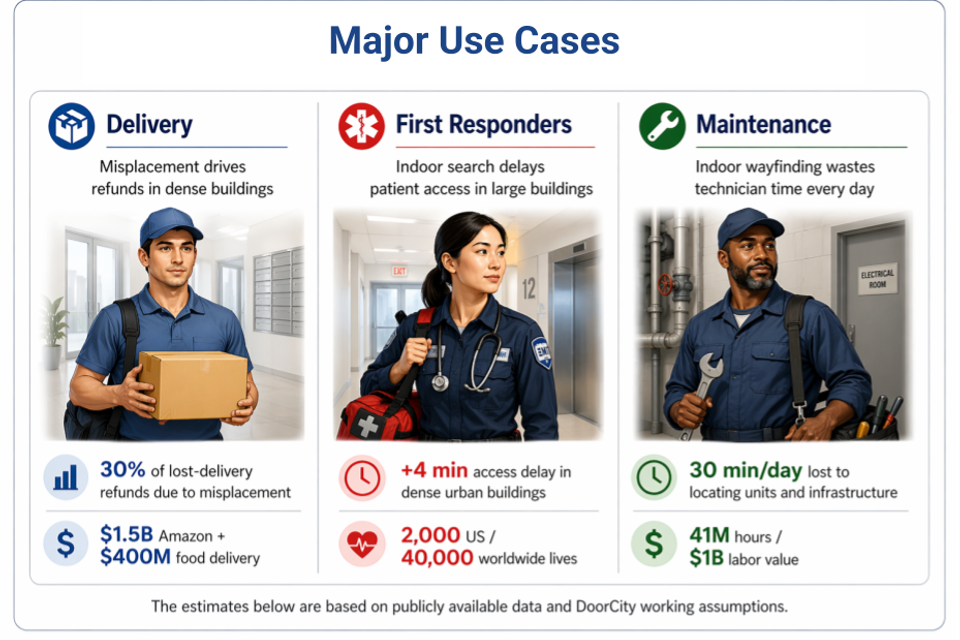
This gap creates measurable impact across delivery, emergency response, and field service — where time, efficiency, and outcomes directly affect revenue and safety.
But the same problem affects everyday life in less measurable, yet equally frustrating ways:
While these challenges are rarely quantified, they represent a persistent friction in dense urban living — impacting millions of people every day.
The final segment — the last 100 meters — is where it breaks down.
In dense cities, the problem shifts from driving to human navigation: finding entrances, navigating interiors, and reaching the correct door.
This gap creates measurable impact across delivery, emergency response, and field service — where time, efficiency, and outcomes directly affect revenue and safety.
But the same problem affects everyday life in less measurable, yet equally frustrating ways:
- Finding your car in multi-level parking garages
- Locating the correct exit in large transit hubs like Paddington or Penn Station
- Navigating shopping malls to find specific stores or aisles
- Understanding building layouts beyond a broker’s handout when renting
While these challenges are rarely quantified, they represent a persistent friction in dense urban living — impacting millions of people every day.